
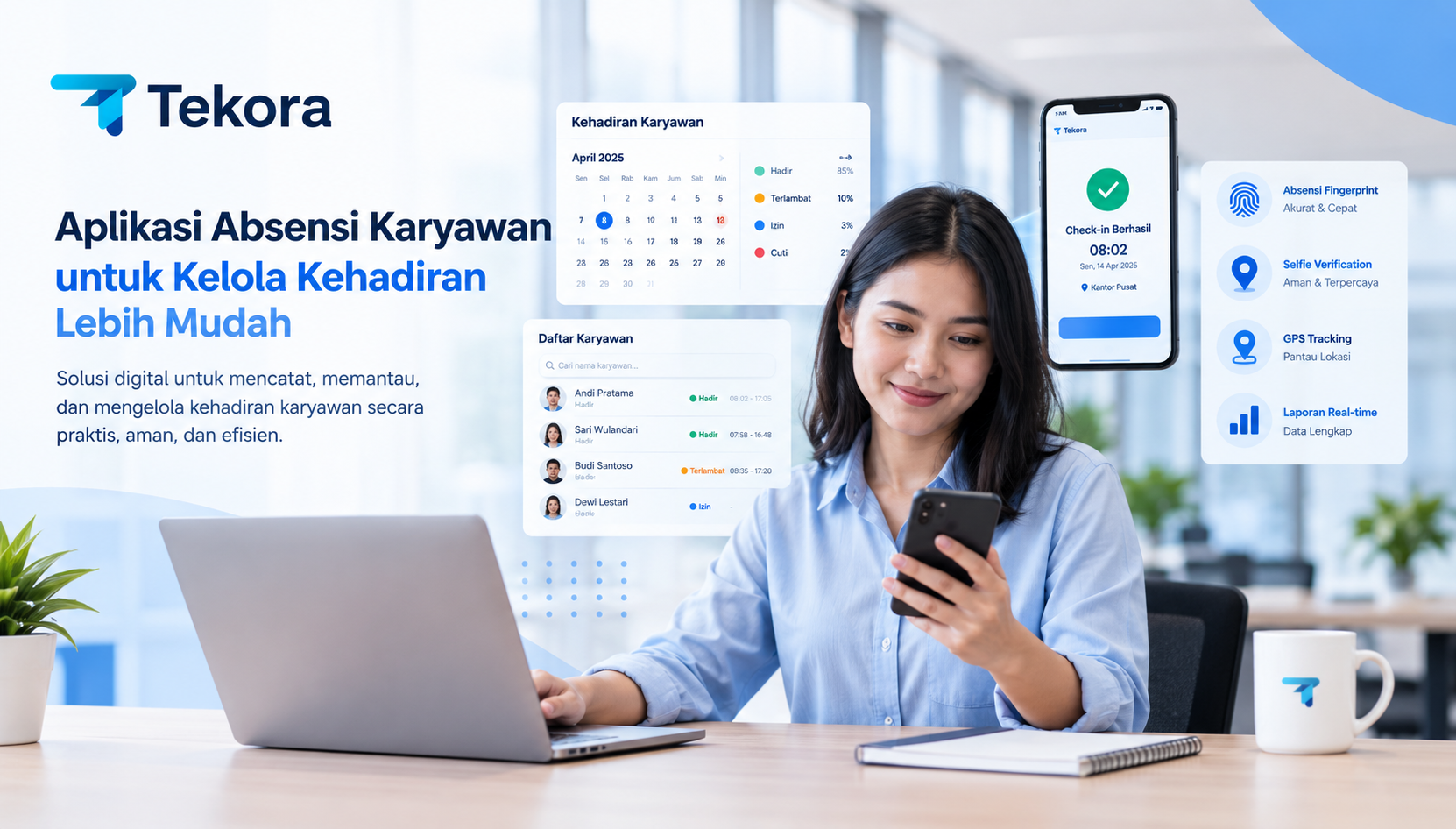
An employee attendance application can help businesses manage employee attendance in a more practical and organized way. By moving attendance records into a digital system, companies can reduce their reliance on manual recording and repetitive attendance administration.
Attendance management is an important part of employee administration. Attendance data can help HR teams monitor employee presence, manage working hours, record lateness, and prepare information needed for various administrative processes.
What Is an Employee Attendance Application?
An employee attendance application is a digital system used to record and manage employee attendance. Depending on the solution, employees may be able to check in and out using smartphones, computers, tablets, or other supported devices.
Unlike manual attendance methods, a digital application allows attendance information to be stored and managed within a structured system. HR teams and authorized users can access the information based on their needs and system configuration.
For a broader explanation of employee attendance applications, you can also explore Tekora's article about employee attendance applications.
Why Do Businesses Need an Attendance Application?
Attendance management can become more complicated as a company grows or introduces different working arrangements. Repetitive manual processes may also require additional time and effort from HR teams.
1. Reduce Manual Attendance Recording
Manual attendance processes often require information to be collected and consolidated before it can be used. An employee attendance application can turn this process into a more organized digital workflow.
2. Make Attendance Monitoring Easier
Digital attendance records can help HR and management monitor employee attendance based on the features provided by the system. Depending on the application, this may include attendance, lateness, leave, and absence information.
3. Support HR Administration
A digital attendance system can reduce repetitive administrative work. HR teams can search, review, and manage attendance information without relying entirely on manual consolidation from different sources.
4. Keep Attendance Data Organized
Digitally stored attendance information can make it easier to retrieve records for specific employees or periods. Reporting and data export features can also support administrative tasks when available.
Key Features of an Employee Attendance Application
Attendance applications do not all provide the same capabilities. Businesses should therefore evaluate features based on their actual operational requirements rather than simply choosing the system with the longest feature list.
Employee Check-In and Check-Out
The primary function of an attendance application is to record employee arrival and departure times. The check-in method should be appropriate for the company's working environment and attendance policies.
Attendance History
Attendance history allows HR teams to review employee records over a specific period. This can be useful when checking attendance information or preparing internal reports.
Leave and Absence Management
For companies with established leave procedures, leave management can be an important part of an attendance system. Connecting attendance and absence information can make employee administration more organized.
Attendance Reports
Attendance reports turn attendance records into information that is easier to review. HR teams can use reports according to their administrative and workforce management requirements.
Support for Different Work Arrangements
Employees may work from an office, from different locations, or in mobile environments. Businesses should therefore make sure the attendance application matches the working arrangements used by the organization.
How to Choose the Right Employee Attendance Application
Choosing an attendance application should start with the company's actual requirements. An application with many features is not necessarily the best choice if those features do not fit the organization's workflow.
Important considerations include attendance methods, ease of use, data management, reporting, security, user capacity, integrations, and support from the application provider.
For a more detailed guide, you can read Tekora's article on how to choose an employee attendance application.
Match the Application to Your Business Needs
Start by understanding how attendance is currently managed. Identify the problems that need to be solved and the processes that need to become simpler.
Consider Ease of Use
An attendance application is used regularly by both employees and HR teams. A simple and intuitive system can make implementation easier and reduce unnecessary user errors.
Consider Scalability
Growing companies need systems that can adapt to changes in workforce size and operational requirements. Scalability should therefore be part of the evaluation process.
Online Attendance Applications for Businesses
An online attendance application allows businesses to manage attendance information through an internet-connected system. This approach can provide additional flexibility for companies with multiple work locations or less centralized working arrangements.
However, companies should still consider account security, access permissions, data management, and internal policies before implementing an online attendance system.
For more information, explore Tekora's article about online attendance applications.
Benefits for HR and Management
A digital attendance system can provide benefits to different groups within an organization.
- HR teams: organize and access attendance records more efficiently.
- Management: access structured attendance information for operational needs.
- Employees: use a more practical attendance process based on company policies.
- Businesses: reduce dependence on manual attendance recording and consolidation.
What Should Businesses Prepare Before Using an Attendance Application?
Attendance digitalization requires more than simply installing an application. Companies should also prepare internal policies and processes to ensure the system can be used effectively.
Establish Clear Attendance Policies
Companies should define clear policies covering working hours, lateness, leave, and procedures for correcting attendance records when an error occurs.
Provide Employee Guidance
Employees should understand how to use the application and follow the company's attendance procedures. Clear guidance can make the adoption of a new system easier.
Pay Attention to Data Security
Attendance records are part of employee administration data. Companies should consider access permissions, account security, data storage, and overall system management.
A Guide to Choosing an Attendance Application for Business
Before selecting an application, businesses should compare their operational requirements with the capabilities of available systems. The decision should not be based solely on the interface or the number of available features.
Important factors may include attendance methods, ease of use, data management, reporting, security, technical support, and the application's ability to support future business requirements.
Tekora also provides a guide to choosing an employee attendance application for business as an additional reference for companies evaluating attendance solutions.
Conclusion
An employee attendance application can help businesses manage attendance in a more structured way while reducing reliance on manual processes. A digital system can support HR teams in recording, monitoring, and managing employee attendance data.
However, the application with the most features is not necessarily the best choice. Businesses should select a solution that fits their requirements, is easy for employees and HR teams to use, provides appropriate data management capabilities, and can support the company's administrative processes.
By understanding internal requirements and evaluating applications carefully, businesses can choose an attendance solution that better supports employee attendance management.