
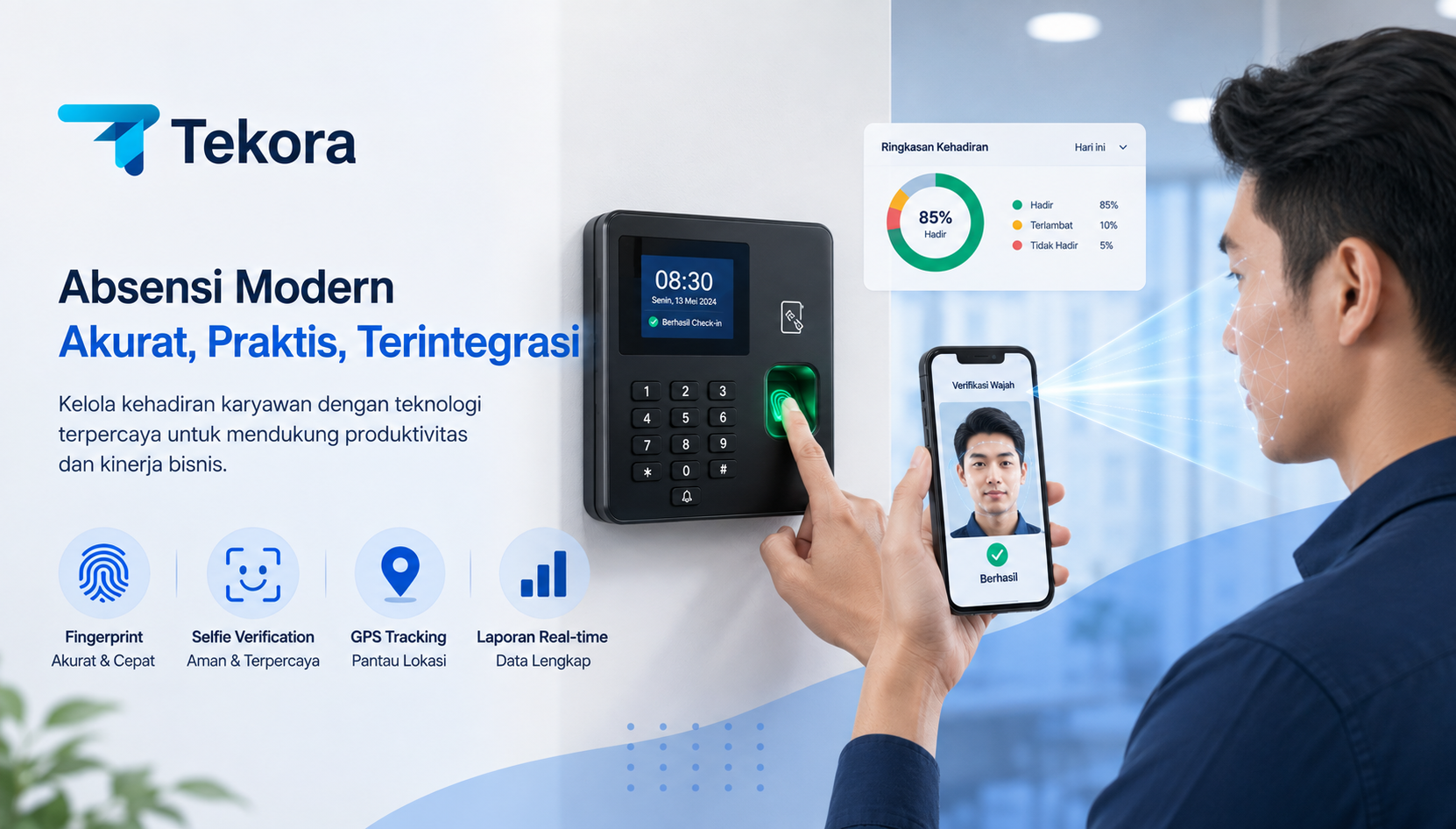
Choosing the right employee attendance software is not simply about comparing prices or counting features. Every business has different requirements based on employee numbers, work locations, shifts, and HR management processes.
A good attendance solution should make attendance tracking more accurate while reducing administrative work. Before selecting a system, businesses should consider several important factors.
1. Start with your business requirements
The first step is understanding how your employees work. A company with employees working from one office may have different requirements from a business with field workers, multiple branches, or hybrid teams.
Consider the number of employees, work locations, shifts, working hours, and reporting requirements. Understanding these needs will make it easier to choose a solution that can actually support daily operations.
2. Choose the right attendance method
The attendance method is one of the most important considerations. Some businesses may need biometric attendance such as fingerprint verification, while others may require mobile attendance with location verification or selfie authentication.
For field workers and hybrid teams, mobile attendance can provide greater flexibility. For employees working at a fixed location, fingerprint attendance may be a more suitable option.
3. Check data accuracy and security
Attendance records are important for HR administration and payroll. The system should accurately record check-in and check-out times while helping businesses reduce attendance fraud.
Businesses should also consider how employee information is stored and managed. Access controls are important to ensure sensitive employee data can only be accessed by authorized users.
4. Look for simple and useful reports
Attendance software should do more than record employee check-ins. The collected data should be converted into reports that HR teams and managers can easily understand.
Reports covering attendance, lateness, overtime, absences, and working patterns can help management make better decisions based on actual data.
5. Consider HR and payroll integration
If your company already uses HR or payroll software, integration should be an important consideration. Connecting attendance data with payroll processes can reduce manual work and minimize data entry errors.
Integration also creates a more efficient workflow because HR teams do not need to manually transfer attendance information between different systems.
6. Make sure it is easy for employees to use
A software solution with many features is not necessarily the best choice if employees find it difficult to use. The attendance process should be simple and easy to understand.
A clean interface, simple login process, and suitable attendance methods can help employees adopt the system more quickly.
7. Support mobile and hybrid employees
Modern work environments often include employees who do not work from the same office every day. Sales teams, technicians, consultants, and field workers may need to record attendance from different locations.
Features such as location verification, selfie authentication, and mobile check-in can help businesses maintain more reliable attendance records for distributed teams.
8. Compare cost with business value
Price is important, but it should not be the only factor. Businesses should compare the software cost with the benefits it provides, including reduced administrative work, fewer data errors, and easier employee management.
A solution that costs slightly more but significantly reduces manual HR work may provide better long-term value.
9. Test the software before making a decision
Before implementing an attendance solution across the entire organization, conduct a trial with HR staff and several employees.
Test check-in, check-out, reporting, employee management, and the features that will be used most frequently. This allows the company to determine whether the software fits its actual operational needs.
Conclusion
Choosing employee attendance software should be based on the actual needs of the business rather than the number of features available. Attendance methods, data security, reporting, HR and payroll integration, ease of use, and mobile workforce support should all be considered.
To learn more about online attendance solutions for businesses, read our guide on employee attendance software and online attendance solutions.
You can also explore our detailed guide on how to choose employee attendance software.